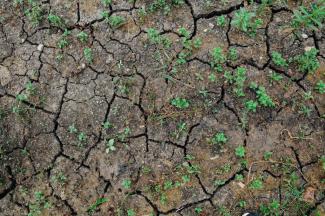
More than 4 million acres have burned in wildfires in the U.S. in 2026, while nearly 46% of the lower 48 states is experiencing drought2. Against that backdrop, it’s no surprise that architects, engineers, and property owners are making drought-ready restroom design a priority.
Drought readiness isn’t simply a temporary response to dry weather. It’s a design strategy that reduces baseline water demand without compromising restroom performance.
Here’s a closer look at how restrooms can be designed for long-term drought readiness.
Lowering Baseline Water Demand
Drought readiness begins with lowering baseline water demand — reducing the amount of water a property requires during normal operation. It helps homes and properties conserve every day — not only when drought restrictions are in effect. Choices made during construction or renovation can deliver meaningful savings throughout the life of the building.
Restroom fixtures are a logical place to start because toilets account for nearly 25% of an average home’s indoor water use3 and nearly one-third of water consumption in commercial and institutional buildings4.
Efficient restroom design can also reduce exposure to water shortages, rising utility rates, and evolving conservation requirements.
How Pressure-assisted Toilets Boost Water Savings
A water-efficient restroom combines fixtures that reduce consumption at every point of use. Sensor-activated, low-flow faucets reduce unnecessary usage by shutting water off automatically. High-efficiency flushometers in commercial and institutional settings also use less water while providing dependable performance in high-traffic environments.
Pressure-assisted toilets — sometimes known as power flush toilets — take a different approach to water savings. They force water into the bowl with compressed air, pushing waste into the pipe instead of pulling it through. That creates a up to 233% waste extraction advantage over gravity toilets so toilets clog far less often while using the same amount of water, minimizing the need for repeat flushing.
Pressure-assisted toilets that use the 0.75 gpf Flushmate 503UH uses up to 53% less water than even “low flow” gravity toilets. It’s helped one apartment complex report a 57% average drop in daily water usage.
Drought-readiness and Responsible Water Consumption
Restroom water conservation delivers benefits that extend well beyond lower utility bills. By reducing everyday demand for treated water, efficient fixtures help properties conserve before drought restrictions, shortages, or supply pressures become urgent.
Lower flush volumes also create measurable savings that continue through both wet and dry periods, making conservation part of normal building performance rather than a temporary response. Meanwhile, lower baseline demand makes homes, multi-family properties, and commercial facilities more resilient when drought conditions worsen.
Drought-ready restroom design can also reduce the energy and infrastructure required to treat, pump and transport water and process wastewater. Together, these benefits help properties use limited water supplies more responsibly.
Pressure-assisted toilets and water-efficient restrooms can’t relieve droughts or prevent wildfires. But designing restrooms for water conservation can help homeowners and commercial property managers be ready to weather droughts — before they happen.
Talk to the experts at Flushmate to learn more.
- National Interagency Fire Center
- Drought.gov
- U.S. EPA
- U.S. Department of Energy