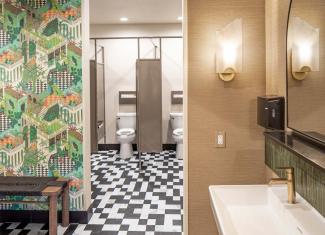
It’s 5:37 on a Friday evening, and a clogged toilet is about to derail your restaurant’s happy hour.
Your restaurant is at full capacity. Glasses clink, laughter carries through the air, and the kitchen is in full sprint. Every table is filled. And then a silent disaster strikes. A toilet clogs in the restroom.
Trouble spirals quickly. The restroom line doubles. Guests whisper complaints. Staff scramble with towels and mops to keep water from seeping into the dining room. Some guests waiting for tables walk out, while others pull out their phones to capture the scene.
One clogged toilet, and your smooth, profitable night unravels into chaos. Not only do you risk tonight’s sales, but also your hard-earned reputation. Nearly 95% of diners say they’ll avoid a restaurant if the restroom is dirty or poorly maintained.1
Now imagine the alternative: a night where restrooms services run flawlessly, your team stays focused on guests, and the only thing overflowing is the bar tab.
The Unique Challenge of Bars and Restaurant Restrooms
Restrooms get a workout in busy bars and restaurants. They get higher foot traffic during peak hours than most other businesses get all day, and — unlike a sports arena or an airport — people have high expectations for the restroom atmosphere and consider it part of the experience. And restaurants don’t typically have maintenance staff ready to fix things or clean up a mess. That job falls to the manager or waitstaff.
When people expect a pleasant restroom experience, a clogged toilet is bad enough. But if it overflows or starts to emit odors, it’s a major problem.
And let’s not forget — people sometimes have a few too many and may drop things into the toilet that shouldn’t go there. So not only are clogged toilets especially troublesome for bars and restaurants, but they’re actually more likely to happen there.
If only your restaurant had pressure-assisted toilets.
How Pressure-assisted Toilets Save Happy Hour
Clogs would almost never be a problem if your restaurant had pressure-assisted toilets. Here’s why.
With a conventional gravity toilet, water basically just falls from the tank into the bowl, creating a siphon effect that pulls the bowl’s contents down the drainpipe. If something is blocking the pipe, the siphon isn’t strong enough to pull it through.
Pressure-assisted toilets — sometimes known as power flush toilets — are a powerful alternative. They force water into the bowl with compressed air, pushing waste into the pipe instead of pulling it through. That creates a 233% waste extraction advantage over gravity toilets — using the same amount of water — so you’ll almost never have to unclog a toilet during happy hour again.
Water Savings, Cleaner Bowls, and More
Clog-free operation isn’t the only advantage pressure-assisted toilets give your restaurant. You can also enjoy significant water savings by replacing gravity toilets with power flush systems that use far less water, such as the 0.75 gpf Flushmate 503UH that uses 53% less water than “low flow” gravity toilets. Plus, people don’t double-flush as often with pressure-assisted toilets, so your restrooms can reduce water usage even more.
In fact, one apartment complex in Baltimore reported a 57% average drop in daily water usage after renovating with pressure-assisted toilets.
Pressure-assisted toilets also:
- Stay cleaner-looking longer, because their powerful flush removes more waste from the bowl
- Don’t get “sweaty” because water is contained in the pressurized vessel, not the tank
- Are easier to maintain because they have fewer moving parts
But the real difference is the confidence that your future happy hours will be free from toilet clogs and all the headaches they can cause. Talk to the experts at Flushmate to learn more.
1—Restaurant Business, “Clean Restrooms Make a Positive Impression,” March 2025